Weekly Risk Brief, Week 41: Imported cost shocks, homegrown unrest
Steyn Mc Dowall · 13 October 2026
Petrol passes R30 a litre, Washington promises further sanctions and anti-immigrant unrest flares in Durban and Johannesburg, while Ebola reaches Kenya. The risks to watch this week, and where insurance does and does not respond.
Each risk is classified by severity, reach and onset, with its direction of travel and risk transfer position.
The view ahead
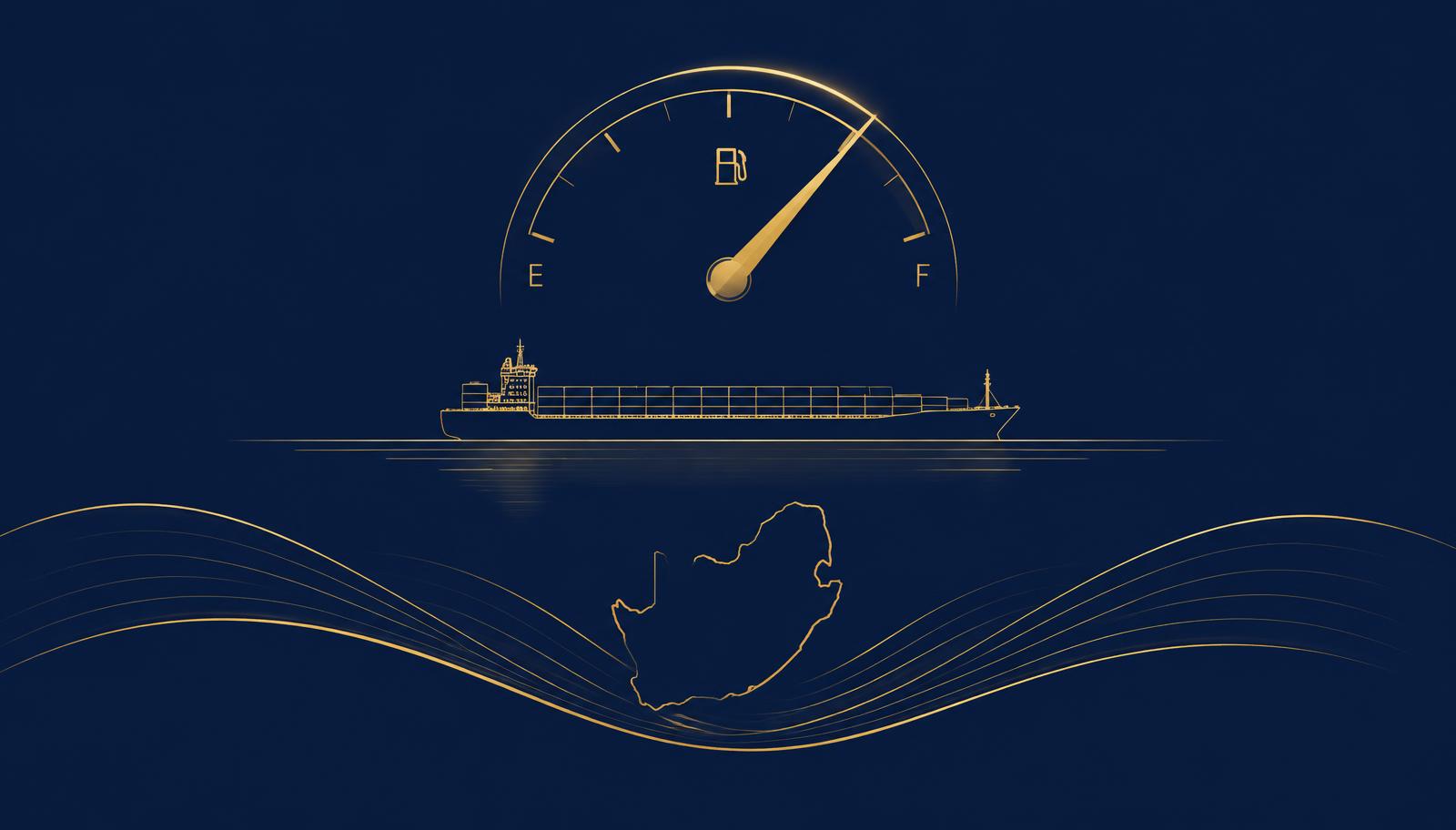
Fuel has passed R30 a litre and Washington has promised further sanctions, while the terminal that handles almost half of South Africa's containers is still recovering. Shocks from outside are landing on institutions that are already stretched.
Petrol broke through R30 a litre for the first time, and petroleum took 24.5 percent of the import bill in the second quarter, up from 15.9 percent and the highest share since 1994. The US ambassador has said more sanctions are coming without saying what they are, after visa restrictions last month and a 16.2 percent fall in Western Cape exports to the United States in 2025. At home, anti-immigrant protests turned violent outside refugee reception offices in Durban and Johannesburg, Home Affairs withdrew its asylum directive, and vessel waits at the Durban container terminal remain close to double their normal length.
We expect the fuel price to reach clients first, through freight, distribution and any contract that does not pass costs on, and the US dispute to reach exporters before it reaches policy. We expect unrest around reception offices and informal trading areas to continue while enforcement capacity, including the military's ageing vehicle fleet, stays thin. Beneath both sits a quieter pattern: Johannesburg's procurement failures and KwaZulu-Natal's R5.2 billion water debt show service delivery decay turning into a cost that clients carry directly. Ebola's arrival in Kenya adds a travel and supply exposure that was not on the register a week ago.
Risks at a glance
Severity is how hard the risk lands. Reach is how far it travels: contained to one sector, connected across several, or systemic across the economy. Onset is how soon it arrives: immediate, building over coming months, or long-range. Nothing this week is rated severe.
| Risk | Severity | Reach | Onset | Direction |
|---|---|---|---|---|
| GEO-01US-South Africa relations | Major | Systemic | Immediate | Rising |
| MAC-01Fuel and imported-inflation shock | Major | Systemic | Immediate | Rising |
| GOV-05Anti-immigrant unrest and strained enforcement | Moderate | Connected | Immediate | Rising |
| HLT-04Ebola reaches Kenya | Moderate | Connected | Immediate | Rising |
| INF-02KwaZulu-Natal municipal water debt | Moderate | Contained | Building | Rising |
| ENE-01Structural dependence on imported fuel | Moderate | Systemic | Long-range | Stable |
| GOV-02Municipal procurement corruption and service failure | Moderate | Connected | Building | Stable |
| INF-01Port congestion at Durban | Moderate | Systemic | Immediate | Stable |
| GOV-06Legal sector BBBEE code set aside | Minor | Contained | Building | Stable |
| GOV-07Direct marketing opt-out registry | Minor | Connected | Building | Stable |
| HLT-05Medical imaging service dependence | Minor | Contained | Long-range | Stable |
| POL-02Ticketing conflict-of-interest allegations | Minor | Contained | Building | Stable |
Dates that will move the picture
- 4 Nov
- Next monthly fuel price adjustment, on the standing first-Wednesday cycleMAC-01
- May 2027
- National Opt-Out Registry opens for consumer registration and blockingGOV-07
- 2027
- South Africa hosts the Men's Cricket World CupPOL-02
- Five to ten years
- Time estimated to complete the proposed Durban refinery redevelopmentENE-01
Opportunities worth watching
Refining restoration. A proposed R117 billion programme, including the former Sapref site in Durban, could lift capacity to 400 000 barrels a day and strengthen supply security, even though it will not make petrol cheaper.
African credit rating agency. The African Union has launched the Africa Credit Rating Agency in Port Louis, an alternative to the three global agencies that could widen capital market access for African borrowers.
Heat-stable vaccines. AI-adjusted lipid nanoparticles kept mRNA vaccines stable at room temperature for up to a year, which would cut cold-chain costs and widen access in regions without ultra-cold storage.
Diamond demand. US natural diamond sales rose 8.8 percent in the first half, raising hopes that the downturn weighing on Botswana's economy is ending.
Risk register
Each card carries the risk, its category, severity, reach, onset, direction of travel and risk transfer position, together with the response we recommend.
- Insurable
- Three blocks. Cover readily placed in the local market.
- Partially insurable
- Two blocks. Cover available for part of the exposure, locally or internationally, with material exclusions.
- Not insurable
- One block. No insurance market responds. The exposure is managed, hedged or retained.
Major severity
GEO-01
US-South Africa relations
- Category
- Geopolitical
- Severity
- Major
- Reach
- Systemic
- Onset
- Immediate
- Direction
- Rising
- Insurance
- Partially insurable
US Ambassador Leo Bozell says he is being insulted by Pretoria while being accused of undiplomatic conduct, and warns that further sanctions are imminent without saying what they involve. Visa restrictions on South Africans came last month. Western Cape exports to the US fell from R17.31 billion in 2024 to R14.51 billion in 2025, a drop of 16.2 percent.
What we recommend
Map exposure to US trade, funding, travel and reputational channels, and test alternative markets for US-bound volumes. Prepare for measures that arrive without notice.
MAC-01
Fuel and imported-inflation shock
- Category
- Macro and energy
- Severity
- Major
- Reach
- Systemic
- Onset
- Immediate
- Direction
- Rising
- Insurance
- Not insurable
Petrol rose R3.33 a litre to R30.25 inland, the first time it has passed R30, and wholesale diesel rose by as much as R3.24 to R31.95 in Gauteng. The US-Iran war is holding global oil supply tight. Petroleum took 24.5 percent of South Africa's imports in the second quarter, against 15.9 percent in the first, the highest share since 1994.
What we recommend
Reprice freight and transport-linked contracts now, and add fuel escalation clauses where they are missing. Test margins against a further increase at the November adjustment.
Moderate severity
GOV-05
Anti-immigrant unrest and strained enforcement
- Category
- Governance
- Severity
- Moderate
- Reach
- Connected
- Onset
- Immediate
- Direction
- Rising
- Insurance
- Partially insurable
Violent protests led by anti-immigrant groups broke out outside refugee reception offices in Durban and Johannesburg, with vehicles burned and businesses looted. Home Affairs withdrew its 28 September asylum directive. The African Union rights commission rejected the claim that South Africa is inherently xenophobic but flagged scapegoating and vigilante blocking of services. The ageing SANDF fleet limits deployment support.
What we recommend
Reassess site security and staff travel near reception offices and informal trading areas in Durban and Johannesburg. Confirm riot and looting cover and the excess above the Sasria layer.
HLT-04
Ebola reaches Kenya
- Category
- Health
- Severity
- Moderate
- Reach
- Connected
- Onset
- Immediate
- Direction
- Rising
- Insurance
- Partially insurable
Kenya has reported its first Ebola death, a man who returned from the DRC via Kampala and flew into Nairobi on 3 October. The WHO has recorded 4 082 deaths from 8 463 cases of the Bundibugyo strain, which has no vaccine or specific treatment. The DRC declared this outbreak in mid-May.
What we recommend
Review travel rules, screening and medical evacuation arrangements for staff and suppliers moving through East and Central Africa. Confirm that health and travel cover respond to epidemic evacuation.
INF-02
KwaZulu-Natal municipal water debt
- Category
- Infrastructure
- Severity
- Moderate
- Reach
- Contained
- Onset
- Building
- Direction
- Rising
- Insurance
- Partially insurable
KwaZulu-Natal municipalities owed uMngeni-uThukela Water R5.2 billion at 31 August, of which R4.29 billion is in arrears and R968.2 million is on current accounts. The provincial Treasury confirmed the figures and warned that the debt threatens the sustainability of water services and the sector's finances.
What we recommend
Confirm water continuity plans and on-site storage for KwaZulu-Natal operations. Check that business interruption cover responds to a public supply failure and on what waiting period.
ENE-01
Structural dependence on imported fuel
- Category
- Energy
- Severity
- Moderate
- Reach
- Systemic
- Onset
- Long-range
- Direction
- Stable
- Insurance
- Not insurable
South Africa now produces about 39 percent of its fuel requirements, against roughly 78 percent in 2019. A proposed R117 billion restoration programme, including the former Sapref refinery, could raise capacity to 400 000 barrels a day and take five to 10 years. An energy analyst expects prices to keep following import parity, so the gain is supply security, not cheaper petrol.
What we recommend
Plan on import-parity pricing for the rest of the decade and do not price in relief from refining. Review supply contracts and stockholding for fuel-dependent operations.
GOV-02
Municipal procurement corruption and service failure
- Category
- Governance
- Severity
- Moderate
- Reach
- Connected
- Onset
- Building
- Direction
- Stable
- Insurance
- Partially insurable
A report by the Centre for Development and Enterprise argues that officials, contractors and criminal networks exploit Johannesburg's failing services: theft creates repair contracts, shortages feed the tanker trade and breakdowns justify emergency procurement. The city spends about R20 billion a year on goods and services, and its forensic unit has examined more than 6 000 cases worth R35 billion. These are findings and allegations, not court outcomes.
What we recommend
Screen suppliers and subcontractors in Johannesburg municipal supply chains and record the basis of every emergency procurement. Review fidelity and directors and officers cover.
INF-01
Port congestion at Durban
- Category
- Infrastructure
- Severity
- Moderate
- Reach
- Systemic
- Onset
- Immediate
- Direction
- Stable
- Insurance
- Partially insurable
A new operating system introduced in August at Durban Gateway Terminal pushed vessel waits to 12 days at one point. Average anchorage times have roughly doubled to nearly six days, though they are improving. Transport Minister Barbara Creecy has criticised the operator over communication. The terminal handles almost half of the country's container volumes.
What we recommend
Keep realistic lead times in fourth-quarter commitments and hold alternative port and road routing ready for time-critical cargo. Ask the terminal operator for berth windows in writing.
Minor severity
GOV-06
Legal sector BBBEE code set aside
- Category
- Governance
- Severity
- Minor
- Reach
- Contained
- Onset
- Building
- Direction
- Stable
- Insurance
- Not insurable
The full bench of the Pretoria High Court has set aside the gazetting of the first sector code for the legal profession, finding that the minister did not fully consider the framework as the law requires. It did not rule on whether the code is constitutional. Law firms will no longer be rated under it.
What we recommend
Revert to the generic codes when scoring law firm suppliers, and review preferred-supplier criteria. Watch for an appeal or a fresh gazetting.
GOV-07
Direct marketing opt-out registry
- Category
- Governance
- Severity
- Minor
- Reach
- Connected
- Onset
- Building
- Direction
- Stable
- Insurance
- Not insurable
The National Consumer Commission has launched a National Opt-Out Registry under amendments to the Consumer Protection Act. Direct marketers must register and clean their lists monthly, and consumers will be able to block individual marketers or whole categories from May 2027. South Africans received 17.47 billion spam calls in the first half of 2026.
What we recommend
Register marketing, collections and call-centre operations, and build monthly list cleaning into process before May 2027. Audit consent records now.
HLT-05
Medical imaging service dependence
- Category
- Health
- Severity
- Minor
- Reach
- Contained
- Onset
- Long-range
- Direction
- Stable
- Insurance
- Not insurable
The Competition Commission has referred GE South Africa, GE Medical Systems South Africa, Siemens Healthcare and Philips South Africa to the Competition Tribunal. It alleges they blocked other firms from servicing and repairing their imaging systems, which raises costs and narrows repair options. Penalties can reach 10 percent of turnover. The allegations are untested.
What we recommend
Map service contracts and single-source dependence on these suppliers across imaging fleets. Hold renegotiation until the Tribunal outcome is clearer.
POL-02
Ticketing conflict-of-interest allegations
- Category
- Political
- Severity
- Minor
- Reach
- Contained
- Onset
- Building
- Direction
- Stable
- Insurance
- Partially insurable
It is alleged that Sport, Arts and Culture Minister Gayton McKenzie placed close associates and Patriotic Alliance members in the new Ticketpro Group, including his former chief of staff as chief executive. The allegations are untested. Ticketpro serves Cricket South Africa and the South African Football Association, and South Africa hosts the Men's Cricket World Cup in 2027.
What we recommend
Record due diligence for any ticketing, sponsorship or hospitality agreement linked to these bodies. Review termination and reputational clauses before the 2027 tournament.
Where insurance carries the load
Nothing on this week's register transfers cleanly: no risk is rated fully insurable, seven sit in the middle and five fall to the balance sheet. Sasria is the sole route for the riot and public disorder layer that the looting and arson outside refugee reception offices calls on.
Marine cargo is readily placed for Durban, but delay and pure economic loss are excluded. Infectious-disease extensions have been written out of local policies, so Ebola is a question for medical schemes and evacuation cover, not business interruption, and a public water failure in KwaZulu-Natal answers only under a utilities extension and its waiting period. Directors and officers, legal expenses and fidelity cover answer defence costs and employee dishonesty where procurement or conflict-of-interest allegations land, though a fine under competition or consumer law is uninsurable, because cover for a penalty offends public policy.
The five risks no market will take have to be managed rather than placed, and each calls for a different tool. Fuel is a price exposure and the only one of the five already landing. Clients can lock in part of next quarter's spend through forward cover arranged with their bank, write escalation clauses tied to the published monthly fuel price into customer contracts, and hold stock or fixed-price supply where storage allows. Each option has a cost: a hedge fixes the price in both directions, and pass-through works only where the customer accepts it, so the decision to settle now is how much of the spend to cover before the November adjustment.
Import dependence moves more slowly and cannot be hedged away. The response is a second supplier and route, a defined stock buffer and a planning assumption of import-parity pricing for the rest of the decade. The lapsed legal sector code, imaging service dependence and the opt-out registry are contract and compliance matters that no instrument covers. Clients should score legal suppliers on the generic codes, appoint an independent maintenance provider for imaging equipment and cap service prices in multi-year agreements, and fund the consent records and list-cleaning work needed before May 2027.
Share this article